2026
86533_Spatial Agency
-
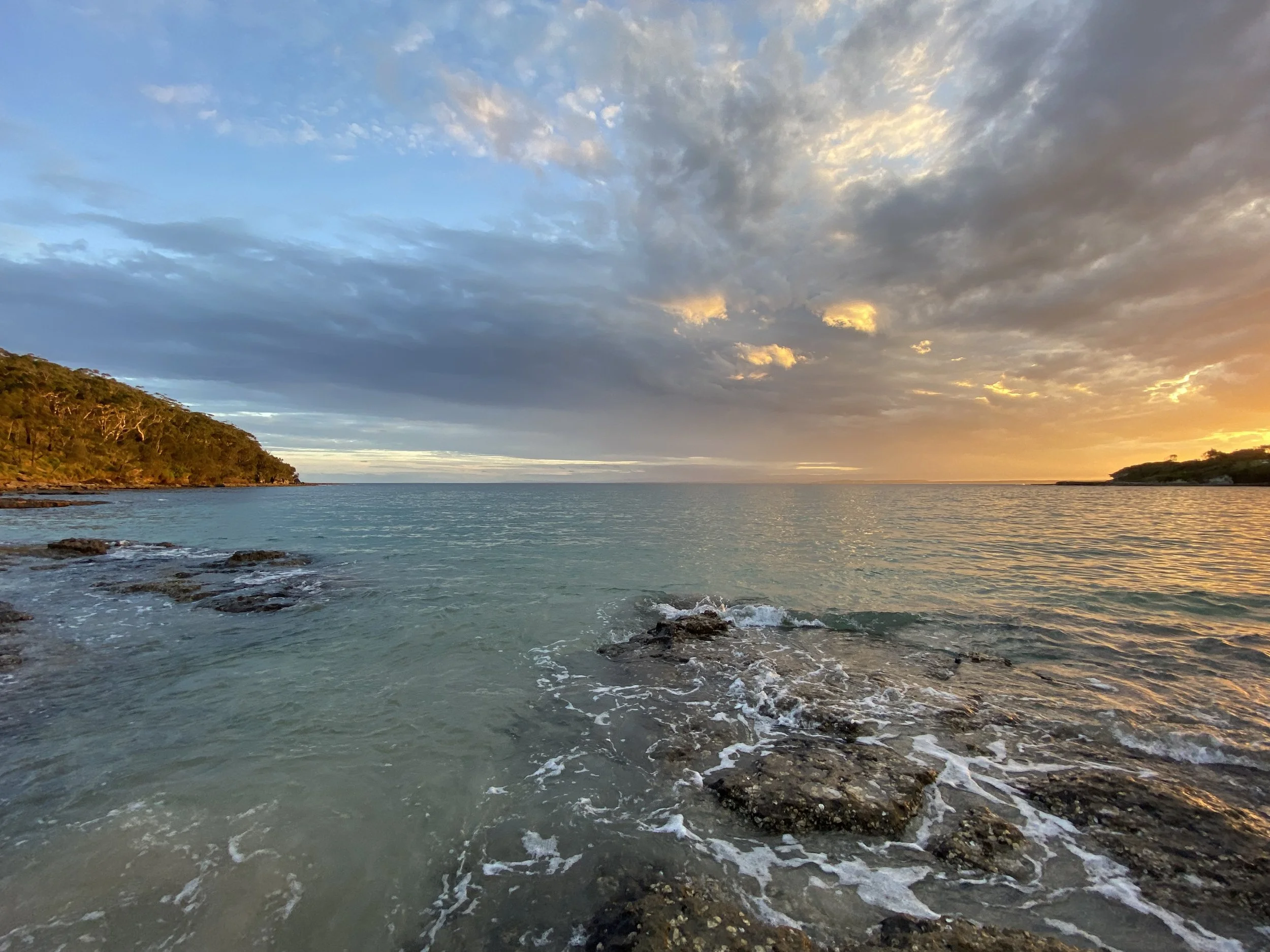
In this design studio, students will map Country as a foundation for proposing a community-centred cultural space within Booderee National Park. The studio explores interior architecture to engage culture, politics, and place – understanding Country not as a neutral site, but as a living system of custodianship, governance, and responsibility. Students will investigate how cultural infrastructure can support self-determination through design, with a focus on the relationships between community authority, visitor experience, environmental stewardship, and economic opportunity.
Students will undertake layered mapping and diagramming of the Booderee National Park, developing a critical understanding of colonisation, dispossession, and the ongoing impacts of western planning systems on Country. This work will be paired with precedent studies of cultural centres and museums, analysed through spatial sequence, thresholds, protocols, and program. Students will then develop spatial frameworks at macro scale that consider visitor movement, interpretive opportunities, access and infrastructure, ecological constraints and culturally appropriate boundaries between public, community-only and restricted spaces.
This research will inform the development of a schematic design proposal for a cultural centre and associated facilities, which may include museum and community spaces, training and employment spaces and visitor amenities. Students will propose designs that strengthen cultural continuity and storytelling while supporting community benefit, revenue generation, and local employment pathways. The final projects will be environmentally and culturally responsive, addressing seasonal change, climate, wind, material selection, and landscape integration, demonstrating how interior architecture can operate as a form of spatial agency that supports custodianship of Country.
-
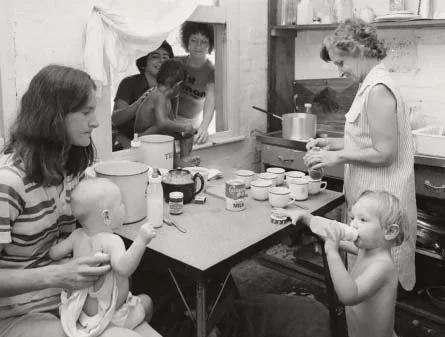
Studio description: Australia’s dual crises of domestic and family violence and housing unaffordability mean that crisis services turn away 1 in 2 women every night. Many of these women have children in their care.
The Blacktown Women’s Refuge studio combines the challenge of designing crisis accommodation for women and children escaping domestic and family violence, on-site support services workspaces, therapeutic, and communal gathering areas. In partnership with Women’s Community Shelters, a leading organisation that provides accommodation and support for women and children through a network of nine safe havens across NSW metro centres.
Blacktown, on the lands of the Dharug people, 34km west of Sydney is one of Greater Sydney’s most multicultural areas, managed by a progressive council and host to a thriving arts and sporting community. Blacktown also consistently records one of the highest volumes of domestic violence related assaults in NSW, with over 2,100 incidents reported in recent annual data (BOCSAR 2023).
The Blacktown Women’s Refuge Studio takes a trauma-informed design approach to design practice, and includes visits to the Blacktown site, meeting with Women’s Community Shelters experts.
Studio brief: The proposed design will develop a core and cluster model refuge with 8 to 10 self-contained crisis accommodation units (cluster), and a domestic and violence support service (core). The existing community centre provides adaptive reuse opportunities for the core, adjacent a parkland with potential landscaped connections between living, working, and social spaces. The units will be located on the adjacent tennis court. Design solutions will focus on trauma-informed design strategies for children on the site.
-
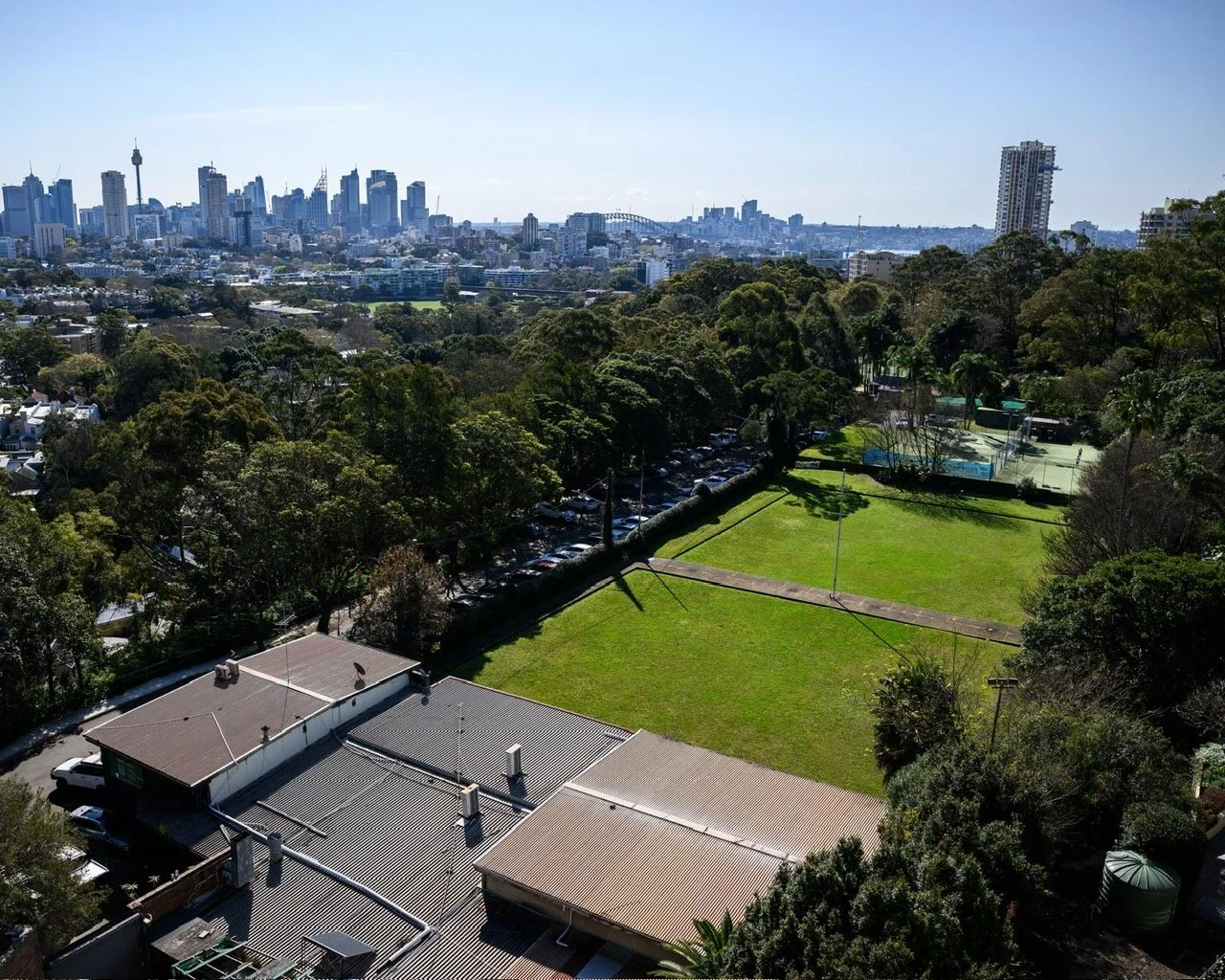
The Paddington Quarry studio is focused on the design of an Aboriginal-owned development which reinstates indigenous presence and provides cultural and/or commercial opportunities on a site which sits at the intersection of Woollahra, Paddington and Edgecliff in Trumper Park, Sydney.
How best to utilise one of Sydney’s most lucrative parcels of real estate to benefit the local Aboriginal community in an area whose identity is now largely devoid of First Nations’ stories?
The site is zoned for public recreation which permits uses including recreational clubs, sporting venues, community facilities, child-care and/or education centres and food & beverage retail, however students will be asked to define their own specific briefs by justifying how it addresses environmental and community-driven requirements. Programs may focus on one primary use (e.g. restaurant, artists studios) or take on multiple (e.g. subdivision, mixed-use precinct).
Students are asked to decide how to address the existing infrastructure on the site: the clubhouse building, 2 x bowling greens and 2 x tennis courts. The type of architectural intervention will be underpinned by each individual concept, that is informed by research & analysis, community-engagement and value proposition.
-
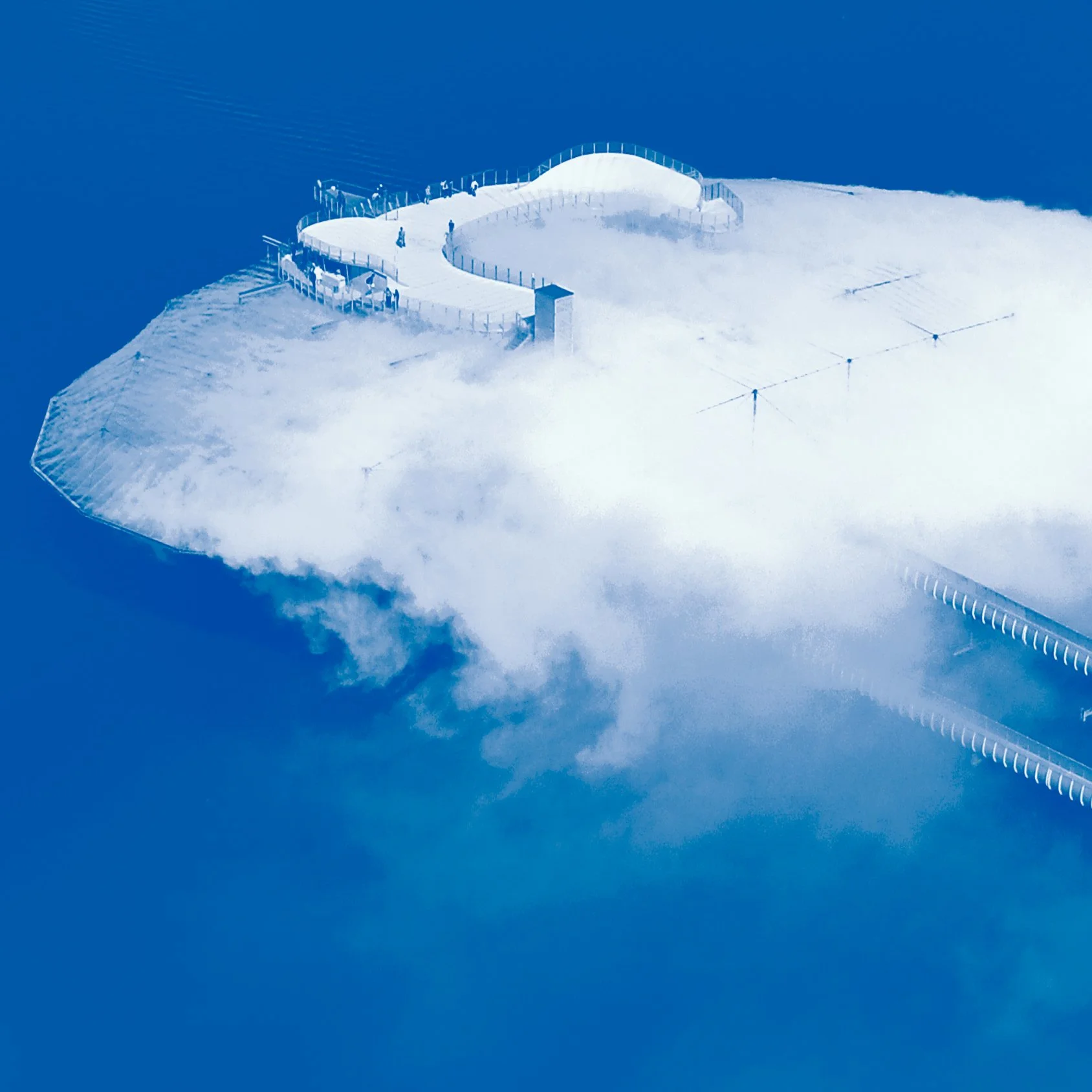
Our place of investigation is HMAS Penguin. We shall walk beyond the plot's demarcation and find its actual boundary, and its connection to Bungaree’s cave, Belmoral Beach, Middle Head, and Port Jackson. The site and your design will interweave Career Tracker and IndigGrow with Country, and transform a military barracks into a place of reciprocity.
Our narrative is the client's mission to support emerging indigenous leaders by creating spaces to express their thoughts and create. These spaces are for adolescents and young adults to co-create, make and test, with places to stay when required. Spaces will be generated by questioning their performance, conditions of use, time, and habitation. Materiality and form generation are not imposed semiotics; your design will contest concepts of workshops, cafes, offices, places to stay, and public gathering.
Our process is to fathom a polychronic concept of past, present and future. This requires a line of inquiry that tests proxemics, memory, environment and cybernetics
-
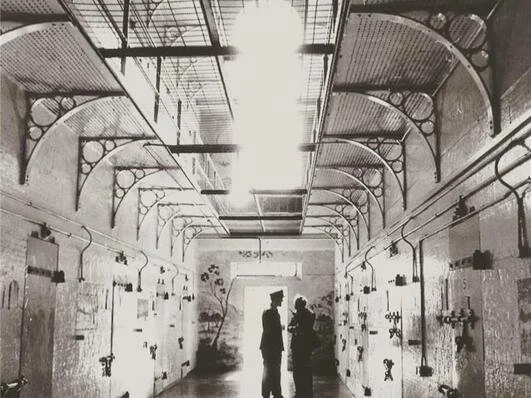
The Parramatta Gaol Studio – Community Recreation Centre is focused on the design of an adaptive reuse strategy and community recreation space on the site of the historic Parramatta Gaol. Constructed in 1842 and decommissioned in 2011 the former Gaol is owned by the Deerubbin Local Aboriginal Land Council as part of a successful land claim in 2015. Embedded within Parramatta’s rapidly evolving urban fabric, the site carries layered histories of incarceration, governance, and Indigenous displacement.
This studio explores how recreation, play, and community programs might act as tools to re-imagine and integrate a historically closed environment with a new high density residential community and university campus.
The Gaol occupies a strategic location directly adjacent to the NSW Government’s extensive redevelopment proposal for the Parramatta North heritage and cultural precinct. Whilst the northern extents of the former Gaol were integrated as part of the rezoning proposal the more historic southern compounds were not. Excluded from rezoning plans with no clearly proposed use or funding the Gaol is both physically and conceptually disconnected from its surrounds.
Deerubbin Local Aboriginal Land Council see the Gaol site as of significant cultural, commercial and economic importance to both the Aboriginal community and the broader public. However, the costs of maintaining or redeveloping a heritage site of this scale are extensive. A staged adaptive reuse strategy has the potential to generate initial income opportunities and re-activation whilst supporting the development of longer-term engagement and investment. Students will explore ways to adapt the site over time, utilising temporary and seasonal uses to engage different audiences to initiate a community responsive adaption of the Gaol grounds.
-
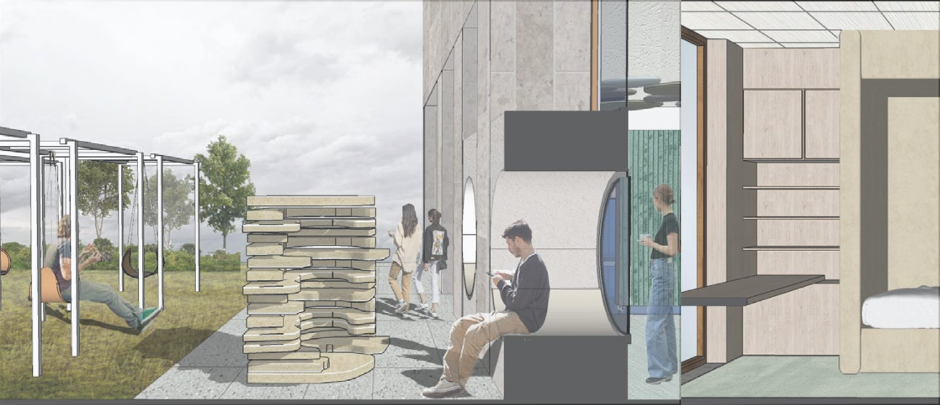
The Centre for Neurodiversity design studio will explore an inclusive approach to architecture that is primarily informed by the nuanced ways in which neurodiverse people inhabit and interact with space.
Situated in the Cliff Noble Community Centre, corner of Renwick St and Suttor St, Alexandria, students are asked to develop a proposal for the refit of the Community Centre that supports the core needs of neurodiverse people and their range experiences.
Working with stakeholders that live with and support neurodiverse conditions including ASD (autism spectrum disorder), ADHD (attention deficit hyperactivity disorder), and other and co-occurring neurodevelopmental and physical conditions, students are asked to research, experiment and imagine a series of highly articulated sensory-responsive spatial propositions that accommodate the nuanced requirements of stakeholders.
Through this studio, students will undertake an exploration of the dynamic and varied relationship between individuals and public spaces through the creation of neuro-affirmative spaces that account for differing abilities in sensory processing, motor abilities, social comfort, executive function, and other aspects relevant to neurodiverse experiences.
Architectural and interior outcomes should not only provide carefully considered sensory conditions but also take into consideration sustainable materials, the lifecycle costs and explore how you can deploy conventional materials in unconventional ways.
-
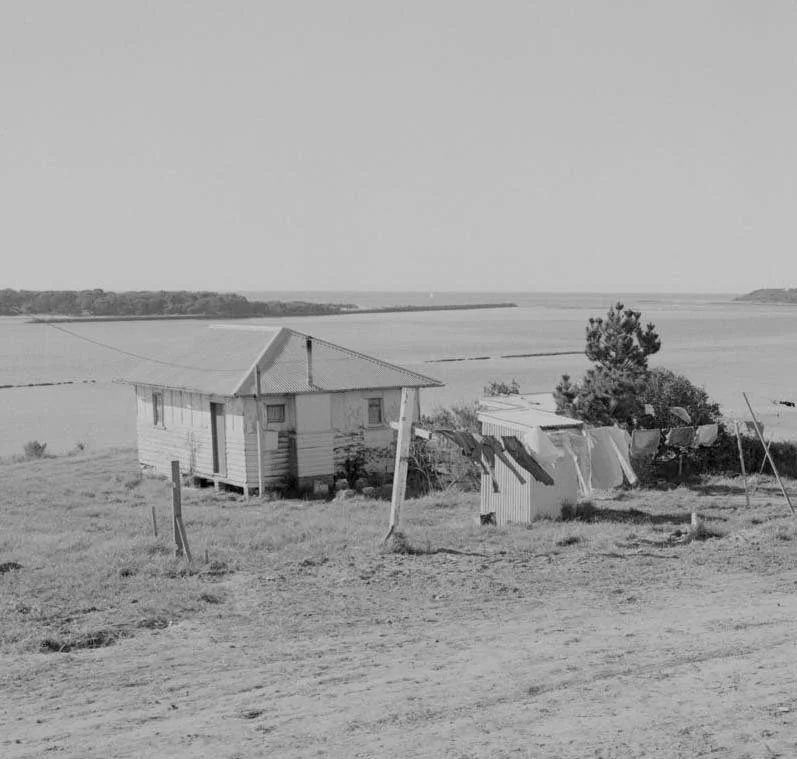
Studio Jerringa is a design studio focused on the development of community infrastructure with the Jerrinja Aboriginal Community at Orient Point. The Jerrinja Aboriginal people are from the NSW South Coast and their traditional lands include Cullunghutti, Shoalhaven Heads, Greenwell Point, Orient Point, Culburra and Currarong. The Jerrinja Aboriginal Community was established in 1900 as an Aboriginal Mission known as Roseby Park. Renamed Jerringa in the late 1960’s the Mission land was given back to the Jerrinja community in 1983.
Of the original Roseby Park Mission houses built in the 1950’s, only one cottage remains today. Sitting vacant, Jerringa residents have expressed interest in repurposing this former home as a community facility. Studio Jerringa takes a community development approach to design practice enacted through a five-day study tour to Orient Point in Week 7, to work with the community to establish their programmatic requirements and aspirations for the new facility.
Engaging with Indigenous sensibilities to land and Country, students will develop speculative design proposals that respond to social, cultural and environmental requirements to develop a new multipurpose community facility that builds on Jerringa cultural strengths.